Songwriting Ideas for Creatives - Pt 3
This blog has the penultimate 12 songwriting ideas for music producers to explore as creative starting points…
25) The DJs Dream

Photo by Aleksandr Popov on Unsplash
This idea is mainly for people who make electronic dance music for DJs. Find a track you like and might even be doing well in your DJ sets at the moment. Import the song into the DAW, then begin to make a track underneath the imported song. The idea is that your new piece of music will be a perfect blend in a DJ mix situation. Eventually, you will have to mute the original ‘catalyst’ tune and finish the idea in its own right, but it can give some cool ideas about sound design, groove, production, and arrangement because of the specificity of the task.
Pro’s
You can follow the structure of the finished piece or play off of it
You might be able to make something specific for your DJ sets in terms of energy levels
Con’s
The other ‘catalyst track’ might be too influential on your sound
It can be disheartening at the moment you choose to mute the other tune, so consider gradually filtering the other tune out, like you would in a DJ set
26) Writing chords around a note
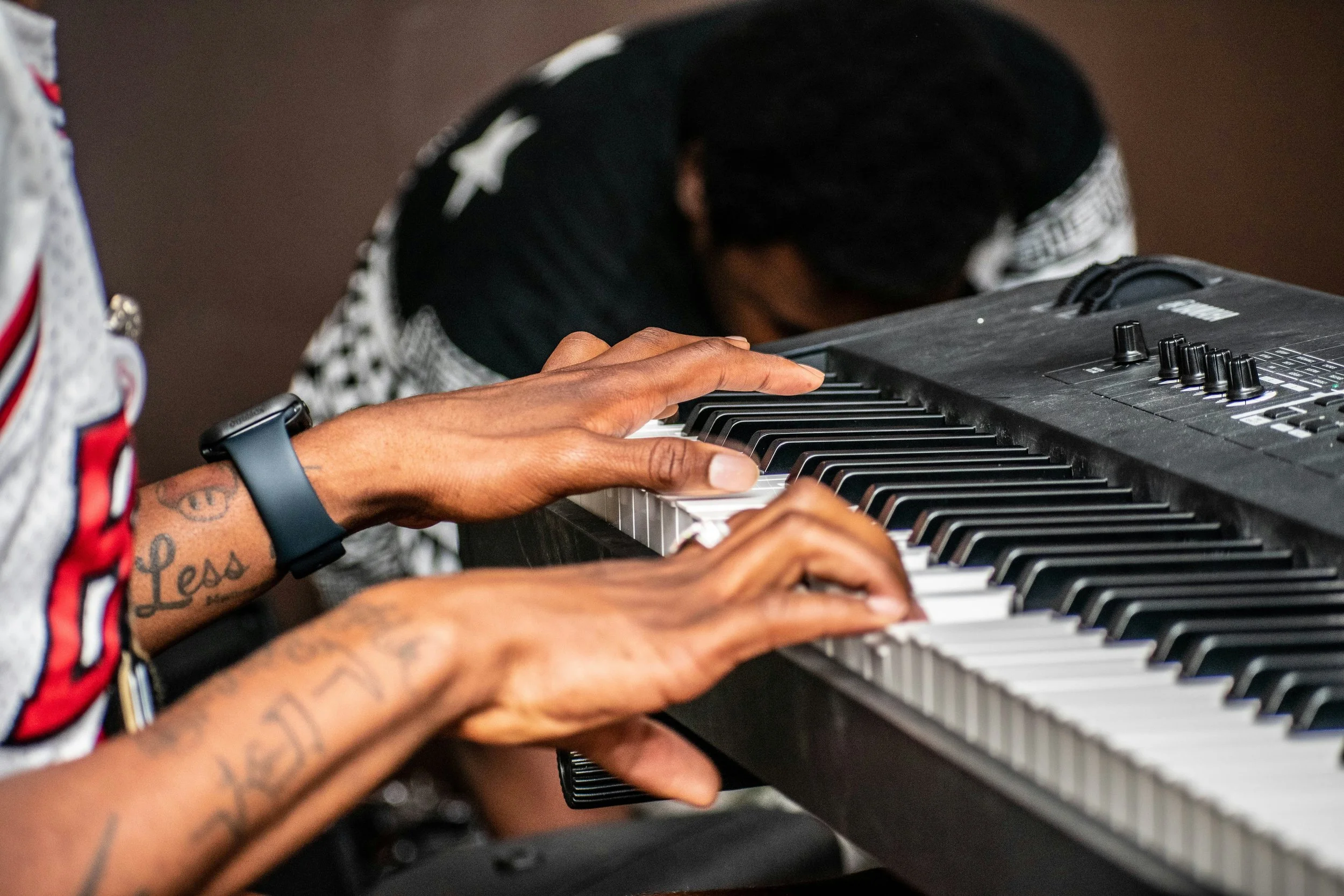
Photo by Kristinah Archer on Unsplash
(Inspired by my pal Simon) You can begin by picking any note. Drum n Bass music, as an example, commonly uses F as the root note. Then, to find interesting chord progressions, we will need to do some preparation.
In small 1-2 bar separate MIDI regions, write/record every single chord you can think of that contains that one ‘F’ note. Try to be as thorough as possible, all types of chords, voicings and even strange chords you have never seen. Once you have them all in your arrangement window, use them as the building blocks for the harmony in a song, building a chord progression that will hopefully be quite exciting and diverse in harmony, but simultaneously has at least one note in common. All you have to do is test the ‘chord blocks’ in different places.
Pro’s
It is helpful if you are not confident in music theory
Lots of opportunities for unexpected chord progressions to occur
Con’s
Takes quite a bit of set-up time, but once it is done, it can be reused for multiple songs
Some of the chords you make might be really discordant, so it depends on the type of harmony you like
27) Start from a different place
Photo by Siora Photography on Unsplash
This one is simple but effective when stuck in a rut.
Picture how you ‘normally’ write music. Is it at the piano or with a guitar? Collecting samples? Lyrics for the hook? Whatever you do to begin, switch it for a different method. Try sitting at a different instrument, start with the lyrics, write the outro first and work backwards. What matters about this technique is that you change something about the order in which you write the music, seeing what this does for the creative spark.
Pro’s
A simple way to switch things up without much effort
Gain new perspectives easily by putting a new instrument at the forefront of the music
Lesser considered sections (outro, for example) can be the start of the piece
Con’s
It can feel uncomfortable at first
The final piece can be disjointed (but that can be interesting too)
Might add an extra job of making obscure sections gel together
28) Roll out some Aleatoric music

Photo by Ric Tom on Unsplash
Take inspiration from John Cage and introduce some randomness into your music. In this prompt, a die needs to be rolled at each decision point. The beauty of this is that each number can be assigned to anything you want.
When you are writing a Melody, roll a 1 or 2, and the pitch goes up, 3 or 4 pitch goes down, 5 or 6 pitch stays the same. For sound design, you get to be creative. Roll a 1 - compression, roll a 2 - distortion, 3 is saturation, 4 is waveshaper, 5 is pre-amp distortion, 6 is guitar amp emulation.
The random element, plus your creative input on what action will happen, is where this gets interesting.
Pro’s
The die/dice could mean anything, and you can get all different types
You can take inspiration from Cage and Stockhausen
Con’s
You need to get a die or a set of dice
Need to do some prep work to decide what each will mean (you can do this outside the studio)
If the composition does something you don’t like, do you commit? Or roll again?
29) Randomiser Tools

Photo by Jason Leung on Unsplash
This is a variation of the previous prompt, but a little more low-key, in that there are many Max 4 Live tools, such as sequencers and similar MIDI devices that can help to bring an element of randomness into your practice without going full ‘chance music’. The same goes for other DAWs and sequencers; they normally have a bunch of random generation tools. With this prompt, find a chord or melody generator and use this as your musical starting point.
Pro’s
Lots of DAWs have tools to generate random MIDI sequences that can be a starting point
It can be quick to generate lots of ideas
Con’s
It can be inconsistent and needs learning/fine-tuning to get the results you want
This idea is quite similar to the one before, but a little less risky in terms of musical output
30) Long Form Compositions

Photo by Branislav Rodman on Unsplash
Sometimes a lack of inspiration comes from a lack of challenge. This prompt was inspired by some of Burial’s long compositions.
Begin by writing a plan for a really long composition 25 mins+, considering how you can keep the audience interested in the piece for such a large amount of time. Consider the journey and narrative of the music. Consider how themes could change and evolve over time.
Pro’s
It is good to challenge yourself sometimes and step out the ‘4mins’ comfort zone for music
You can plan the ideas in advance on a sheet of paper for example (visual score)
Con’s
It is a considerable amount of work
Keep the audiences attention can be a major challenge in the process
31) Through-composed Music

Photo by Branislav Rodman on Unsplash
This is where you write a piece of music and use repetition as little as possible in the main sections. One good example of this type of song is "Bohemian Rhapsody" by Queen, where each section is different to the last. It is quite rare to hear in popular music and loop based genres. The trick is balancing the familiar and the new.
Pro’s
It can be really exciting to constantly hear new sections of music in the piece
Gives lots of room to try new ideas
Con’s
It can be difficult to get all the sections to link together and feel like a consistent piece
If you find a loop or section you really like, it can be tough to know if you should develop it into a new track
32) Rewind to find the sublime

Photo by 愚木混株 Yumu on Unsplash
This would only be for the start of a track but consider using that as much as possible, you will write the initial concept in reverse. Then take a selection of sounds and reverse it all back. The idea being to make a tangled web of approximately equal amounts of forward and reverse sounds. This becomes interesting when the reverbs, delays and other effects are bounced and reversed as-well.
Pro’s
This can channel inspiration from some more experimental compositions such as 'The Beatles - Tomorrow never knows’
It is interesting to be building an idea backwards and hearing the result only for the first time when you reverse it
Con’s
It could be a waste of time (so maybe just experiment for a few minutes on this one)
There is a tendency that things can sound a little messy with clicks and pops in some instances.
33) Get it on the first take
Photo by Rafael Garcin on Unsplash
This one goes against most of my good advice which is get it right at the recording stage. Instead revolt against tried and true conventional ideas for just a few minutes, to add some improvisation and spontaneity to your recording process Set yourself a challenge that you have only one take. You need to write a piece of music, but for each instrument, synth or midi part you are only allowed one try. Whatever gets recorded must be used. One take, use what you captured.
Pro’s
It can get you out of a certain headspace
You can save time on the initial recordings
It can help to capture spontaneity
Con’s
It is not good to do this all the time, practicing your instrument is a good thing
You could end up spending more time editing things in time that getting it right first time.
34) Write a 12 Bar Blues

Photo by 大胡子 on Unsplash
Take inspiration from this classic chord progression and use it as a structure for your track. This is particularly interesting if it is not a blues track. A great example of this is Kiss by Prince, the 12 bar is stretched out to make a larger structural feature of the song.
Pro’s
A classic chord progression that has worked well in many songs
It is a great foundation for improvisation in the lead or vocal lines
Con’s
Might need some editing if you write normally write electronic music in groups of 8 and 16 bars
Inherently repetitive in nature
35) Is it too stereo?
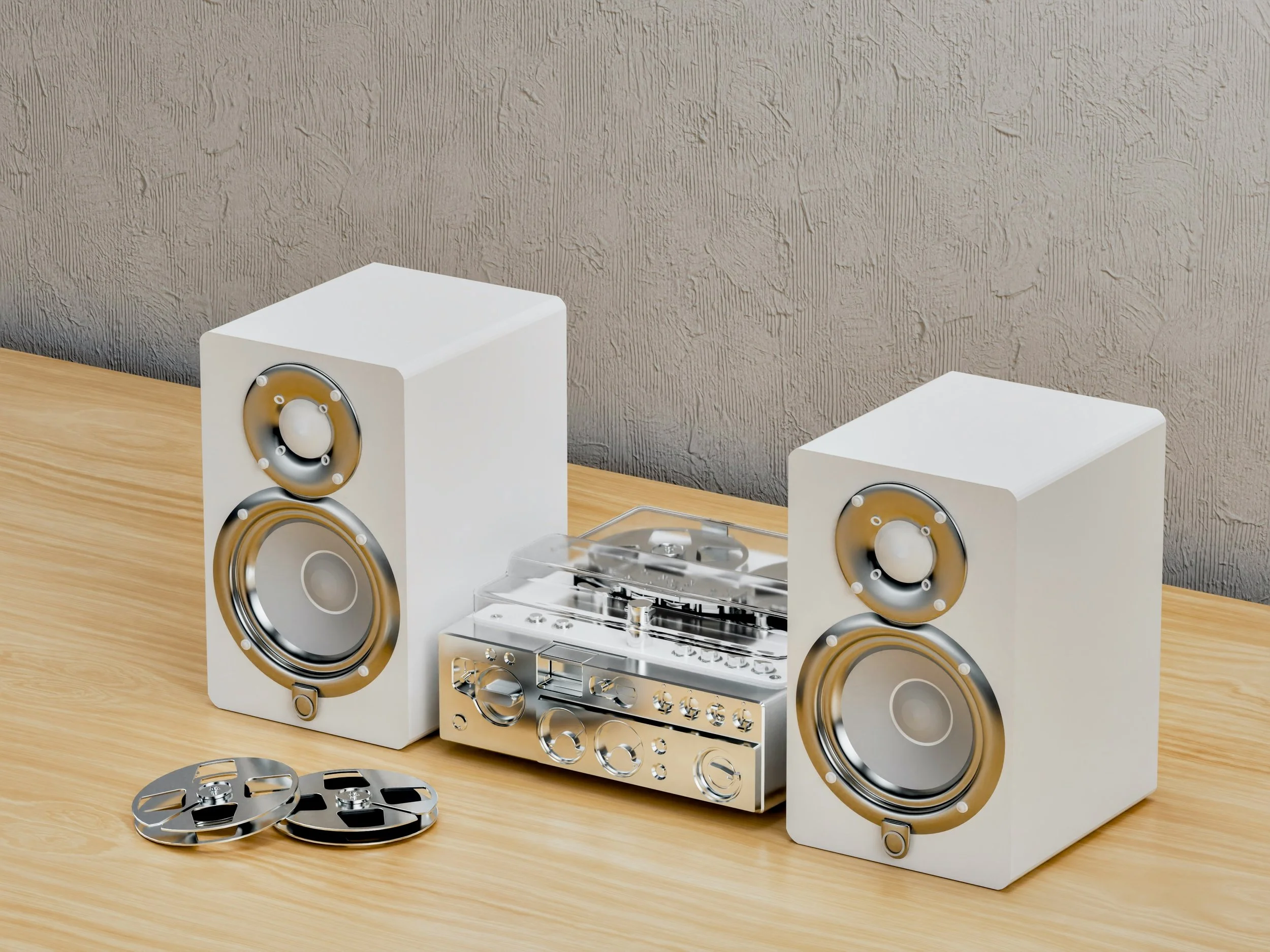
Photo by 大胡子 on Unsplash
This is really extreme and I tried it a few years back with little to no success. However, it was a super fun experiment. The challenge is to write one song for the left speaker and a different song in the right speaker that will then be played back at the same time. It taught me a whole bunch of things about space, call and response, stereo image, placement of sounds. I would recommend to anyone, even though I am pretty certain it will be a tough job to make it work.
Pro’s
It is a great opportunity to learn about a whole range of topics through experimentation
It is interesting to write the left and right parts separately and then hear them play together for the first time like an audience member would.
Con’s
When I tried it, it was a mess, so you might need to keep both songs simple both harmonically and rhythmically
Might be a bit too experimental for some people
There will potentially be phase / translation issues between headphones and speakers
36) The Sound Walk

Photo by Hiep Duong on Unsplash
For this prompt, you will need to go on a walk and record the sounds of the journey (remember to be safe). Then this sound recording dictates the arrangement for the track, you can’t edit the recordings linearity but you can change it and automate it with FX. Most importantly, the sound walk dictates the structure.
Pro’s
The structure is dictated by the recording, you just need to follow it
Lot of room for the development of sounds over time
Con’s
It might take a while to find a good place to walk
Need to be safe when walking and recording
This prompt is a bit too similar to number 9, the only real difference is that this is likely outside with more movement
That was the penultimate list of 12 prompts for music production starting points. If you do make anything using these ideas, I would love to hear about it. Feel free to send me a link. I won’t be able to respond to all messages, but I am interested in finding out which ones work for you.
Look out for pt3!
If you would like to develop your music production, or you are interested in 1-to-1 tutorials, check out the services listed below for online lessons to level up your skills:

Matt Chapman1st October 2025