How to make a Music Album
This blog discusses the process behind the ‘Noise and Sine’ Album, which was completed in just over a month. The concept was to make everything using Sine Waves and Noise Oscillators. Only 5 plugins were allowed in an attempt to strip the music-making process back to the most basic elements and define more of my musical style.
How I Started My Album
Having a rough idea of a goal is going to be important for direction. Jotting down at least a rough outline of the main aims is going to be the starting point. Then work backwards from the deadline, making a rough plan, to see how the time will approximately be used for the project.
Start at the end - First think about the deadline and how many tracks, then work backwards to make a rough plan.
For example, if the album needs to be on Bandcamp by the end of the month, I need to make sure that I start uploading it on the day prior. To upload the album, I will need the album details and description, album art, final track order and the final masters of the music. This means I need the masters done a few days before that, I think it will take me X days to master the album… and it would continue from there. That is how I would go about my planning, starting at the end and working backwards. To make the plan it should only take 30minutes. Anything more than that an it is either too detailed to be useful or it is a positive form of procrastination. An example of my plan is below.
If you are struggling to come up with ideas for your project, you can check out a couple of my previous blogs to help with generating ideas:
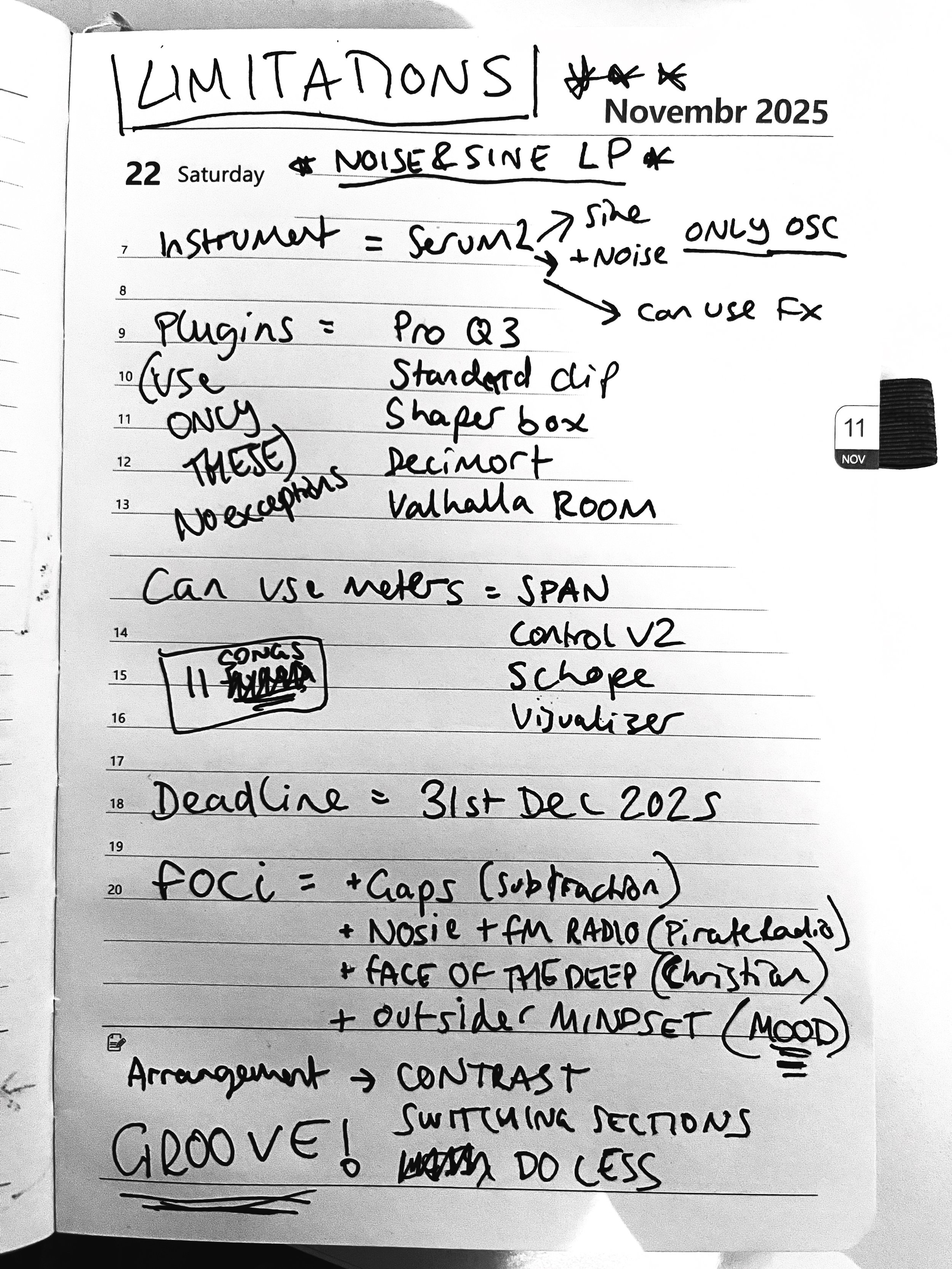
My post on Instagram to publicly create a deadline for accountability.
Making Public Deadlines
One experiment with this particular project was making a public deadline on Instagram. Even if only a few people see it, there is now some external accountability and a deadline that others could see. The positive of this approach is accountability and an outside pressure, which helps with motivation. The negative is that is goes against a common saying which is, goals are private until they are done. Sometimes working quietly, is important to achieve deep and meaningful work (quiet in terms of not promoting or positing it before it is done). That approach seems to directly contradict the modern constant content output. However, for this particular project I found the external deadline to be somewhat motivating.
Another approach could be to get accountability from few close friends. Only tell them what you want to achieve and the deadline. Ask them to keep you on track, rather than going completely public. Make sure to pick the right pals that want to see you succeed and this is something to experiment with, in terms of public and private deadlines to see what helps.
Idea Phase
One of the most exciting things about starting a new project for me is the idea generation stage. This is where I will write lots of small ideas in a short space of time. I find it is much easier to get a feeling of the overall album when I am looking at a whole bunch of ideas. Typically, I will write way more ideas than songs that I need. For a past project it wasn’t too unheard of to write 200 ideas to find the best 20. However, for this project my ideas phase had to be a whole lot shorter, having only a week to create ideas. That gave me time to do about 12-15 ideas for the 11 final tracks that I wanted. This was one of the ways that I saved time to be able to get the album done in a month.
The idea phase itself is simply having fun and making a bunch of ideas with a rough outline of a structure as soon as I possibly can. I try and stay away from short loops as much as possible. The way I see it, if I have a boring 5-minute tune, the goal is clear, make it more interesting. However, if I have a solid 8 bar loop the directions I could go next are almost limitless. So one technique I use is to copy my loop over a whole bunch of times and just delete parts to make an arrangement in about 5 minutes.
An important note about the ‘idea phase’ is that it is a time where you do not try and judge the music. Just make what ever comes out, have fun and don’t spend too long on one idea. The point is to get a grasp of your current ‘sound’ and what you are making. If you look back over 15 ideas, it is much easier to see themes emerging than looking back over 1 idea. Also, it is important to not let the ‘editor’ and ‘creator’ parts of your brain speak at the same time. Make, then edit.
There is some criticism of this approach because it can be viewed as quantity over quality, however I disagree. There is still an aim for quality, you are just postponing those thoughts and decisions. The reason I am so confident in this is because of my experience. In the past I have made some loops that were technically pretty great, the LUFS were super loud, the bass was full of good harmonics, no masking. However, the ideas were also rubbish. So in that scenario, I have spent a whole bunch of time mixing and engineering an idea that I don’t even like or think represents me musically. I think the spirit, narrative, idea, vibes (whatever you call it) of the music, the idea, is the most important thing, you can always get someone to help with a mix down, but it is much trickier find a musical idea once the sonic framework is rigid from over engineering.
The Middle Bit - Stop Procrastinating and Make the Thing
After the idea phase, depending on how many rough sketches I have, I might go through my first round of revisions, deciding which tracks fall into different categories. Broadly, there are three, category one is ‘yes’. These are songs to finish because the ideas are clear and I have a rough vision already of how I want to finish it. These are rare, but it does happen and they are normally the ones that get finished first and things tend to happen quite quickly. The second category is ‘needs development’ these ones need a further exploration and experimentation stage. I might remix the stems, combine it with another idea, add a bunch of extra sounds, delete a load of parts and build up from just one little section. There are lots of ways to develop an idea maybe that could be a topic for my next blog post, how to break out of the loop and develop ideas. The third category is ‘rainy day’. These songs are where I am not feeling the sounds, can’t see an idea at the moment and something I am generally not keen on at this time. However, it is important to note that I don’t delete these ideas, I keep them in a folder to listen back to at a later date. Sometimes (a month or year later) you can be going through this folder on a ‘rainy day’ when you need inspiration and find something that is an absolute gem that you definitely can make into a great song. There are a bunch of reasons why this happens but most of the time I found that my taste and mood seems to have a bit of an impact on how I feel about different music. So just because it is not right for today doesn’t mean that an idea won’t be amazing tomorrow.
Once I have divided them into categories, I will normally start cycling between the different tracks, trying to pull them all up to a similar level. Personally, I like to start with the tune that is furthest behind the other and bring that up to a good level in terms of ideas, arrangement, and rough mix and keep going until they are all at a good stage.
Create Music Album Cover
Once all of the tracks are in a good place and I think they are almost done, I like to take a break to get away from the music for a couple of days/weeks if possible. This is when I write all of the album info, description and make the album artwork. The two main places I used for artwork are Canva to create the thing and I will frequently use either a photo I have taken or a copyright free photo from Unsplash, which has some amazing free photos.
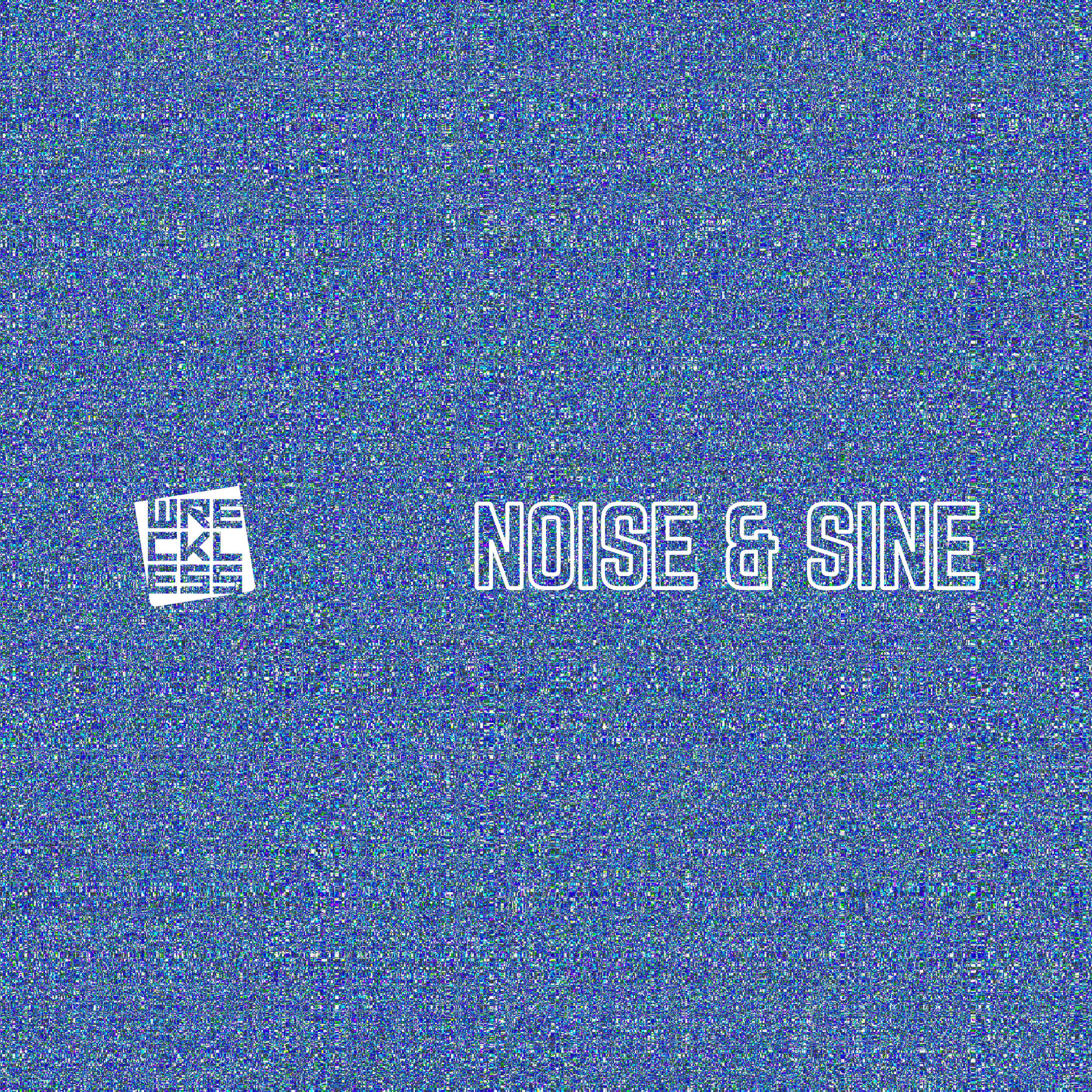
Artwork for the noise and sine LP
Mixing and Mastering
The mixing and mastering stage is a chance to get things sounding high-quality and release-ready. The mixing stage is focused on using EQ, compression, FX and automation to make each individual track sound balanced, interesting and to make sure that the idea translates in the best way possible on the biggest number of sound systems. The mastering stage is mainly focused on making sure that the whole LP has a consistent sound, making final adjustments and improvements and most importantly it is the quality control stage where all the small details of the project go under the oscilloscope.
Distribution and Promotion
For distribution there are lots of different services that you can use to get your music out to Spotify, Apple Music, Tidal and all the others. However, I think one of the best places to put music and grow your audience is Bandcamp and this is something that I make sure to prioritise when releasing music. This is because on Bandcamp, you can get paid quickly and fairly. There is also a way to build a following that you can email and contact without having to go through a paywall. There are also loads of other cool things on there too. So that is the main way to distribute the music digitally now-a-days, physical distribution is a whole other story.
Noise and Sine - Experimental Electronic Sample Pack
So that is a bit about how I wrote an album in a month. To mark the occasion I made a sample pack of all my favourite sounds from the LP which you can download below. Let me know how long it takes you to write an album, can you write an album in a matter of hours? Does it take you years? Would you be up for the challenge of writing an album with me coaching you through the process?
Noise and Sine is an experimental electronic sample pack built entirely from sine waves and noise, designed for producers who want to explore minimal sound sources, creative limitation, and deep sound design.
All sounds in this pack were made for the Noise and Sine LP, using a focused, limitation-based workflow and heavy processing to push simple waveforms into complex, expressive material. You can get the LP here from my Bandcamp.
Contents
• Synth drums and percussion (mainly one-shots but some loops too)
• Bass textures and low-end elements (mainly loops)
• Atmospheric layers, pads and noise textures (loops)
Wav, Stereo, 44.1kHz, 16 bit
100+ samples
Limitations
Every sound starts from either a sine wave, noise or both, then they were processed only using 5 plugins, ProQ, Standard Clip, Decimort. Shaperbox and Valhalla Room.
The goal is to provide interesting, characterful sounds that encourage experimentation rather than instant results.
This makes the pack well suited for:
• Experimental electronic music
• Drum & bass
• Techno
• IDM
• Ambient
• Sound design for hybrid genres
Audio previews are available at the bottom of this page
Matt Chapman13th January 2026